
IGO Jobs organisation and location pages offer different ways into the vacancy list. Start with an employer if you know whom you want to work for, or a country or city if where you live is the first constraint. Both routes lead to the same individual job pages.
Start with an employer or a place
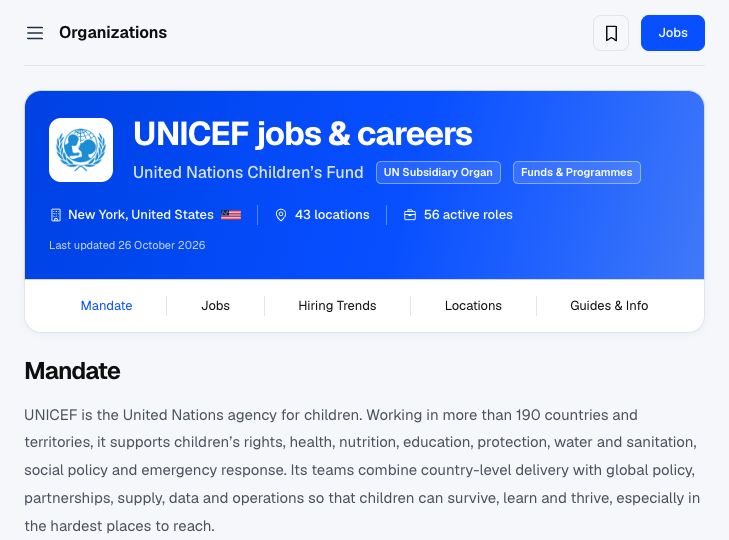
Organisation profiles collect vacancies and context about an employer, including its hiring locations. Location pages bring together employers and vacancies associated with a country or duty station. A role can appear in both collections without becoming two different vacancies.
The purpose is to support different starting questions. Someone researching UNICEF can stay with that employer; someone looking for work in Geneva can compare the organisations represented there.
Use the context without mistaking it for the whole market
Recorded hiring trends describe the vacancies in our database. They are not a complete account of an employer’s workforce or every local vacancy. The vacancy methodology explains the scope of the underlying information.1
Use those patterns to orient a search, then read the requirements and terms of individual roles. A location with relevant employers does not guarantee a suitable opening or eligibility to work there.
Find guidance close to the vacancies
The pages place relevant guidance alongside the listings. In Switzerland, that includes links to application information and the directory of CDL-linked employers. Detailed advice remains in the dedicated resource so readers can return to it without searching several city pages.
The aim is a clearer connection between finding an employer or place, understanding the available context and examining a vacancy. Start with the route that matches your search, then compare the individual roles.