
Applicants can use AI to improve UN job applications where the employer permits it. UNDP, for example, allows help with editing and structure, but prohibits AI during live interviews.3 A study has raised a separate concern: in simulated hiring tests, AI screeners favoured CV summaries written by the same AI tool.1 The finding raises questions about how candidates are judged, but does not show that using AI improves someone’s chances in actual UN recruitment.
An older study enters the UN recruitment debate
Ian Richards, an economic affairs officer at UN Trade and Development (UNCTAD), previously led the Coordinating Committee of International Staff Unions and Associations.
In a LinkedIn post circulated this week, he argued that research on AI screening strengthens the case for using AI to draft UN applications. He also questioned how employers could prevent bias if hiring managers rely on the same technology to assess candidates.2
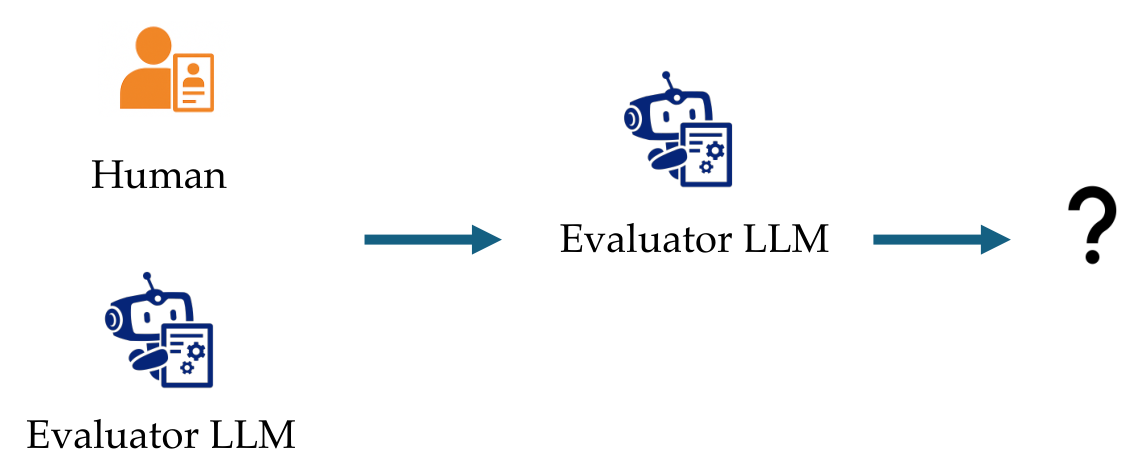
The paper, by Jiannan Xu, Gujie Li and Jane Yi Jiang, first appeared in August 2025 and was revised in June 2026. Its experiment compared alternative versions of the same candidate’s CV, changing the executive summary while preserving the underlying profile. Several language models favoured summaries they had generated themselves, including after the researchers accounted for measures of writing quality.1
The distinction matters because a recruitment system is meant to identify relevant capability. A preference for a particular model’s phrasing could instead reward a choice of writing tool, something an applicant may have no reason to connect with suitability for the job.
A shortlisting advantage is not a hiring probability
In simulated screening across 24 occupations, candidates whose summaries came from the evaluating model were 23 to 60 per cent more likely to be shortlisted than those with human-written summaries. The figures describe a relative difference within an experiment, not a 60 per cent chance of selection.1
The study did not track applications to UN vacancies. It cannot identify which tool a hiring office uses or predict how its results would carry through interviews and other assessments. Nor does it establish a universal ranking of the best AI tools for applicants.1
For a jobseeker, those limits change the practical conclusion. Trying to guess an employer’s software is not an evidence-based application strategy. The more useful question is whether the final text explains the person’s actual contribution clearly enough for a recruiter to assess it.
UNDP already distinguishes editing from misrepresentation
Published guidance from the UN Development Programme permits applicants to use AI for proofreading, structure and clarity. It also allows help interpreting job descriptions and practising interview questions. The same guidance rejects fabricated or exaggerated experience and generic answers that have not been adapted to the candidate.3
Permission does not carry unchanged through every stage. UNDP prohibits AI use during live interviews and in assessments where it has not been explicitly permitted. Applicants must read the relevant instructions and be prepared to explain their use of AI if asked.3
Those are UNDP’s instructions, rather than a rule that can be assumed to apply identically across the UN system. For applicants, the employer’s published requirements provide firmer ground than speculation about whether a reviewer will prefer AI-generated prose.
UNDP’s wider recruitment guidance also makes clear that selection extends beyond the written application. Assessments can include recorded interviews, written tests and competency-based interviews, followed by reference checking where applicable.4
The employer’s question is what the software measures
The concern extends beyond whether a model recognises its own style. In an article published in May, ILO senior economist Janine Berg described a recruitment system that attempted to identify a growth mindset by counting words associated with growth, development and learning. Her example illustrates the difficulty of turning a human quality into a reliable automated measure.5
An apparently consistent score can still be a poor measure of the ability an employer needs. For international recruitment, a useful test would compare how a system treats equally qualified candidates whose evidence is expressed differently. Recruiters would also need to examine whether the reasons for a rejection correspond to the vacancy’s requirements.
Human review needs a defined purpose in that process. A reviewer who merely accepts a generated ranking has little opportunity to identify a mismatch between polished wording and substantive experience. Checking the evidence behind a recommendation requires access to the application and a clear assessment standard.
What applicants can reasonably take from the debate
For applicants, the defensible use of AI is to improve the communication of evidence they can stand behind. An editing tool can help remove repetition or organise an example; the applicant still needs to check that the revised wording preserves the scope of their work. A sentence that upgrades assisting a project into leading it is a factual change, however fluent it sounds.
Preparing real examples for competency-based interviews provides a useful check on the written application: can the candidate explain the situation, their own actions and the result without relying on the submitted wording?
The screening debate leaves employers with a separate responsibility. If automated evaluation gives an advantage to a writing tool, recruitment may become a contest over presentation rather than a comparison of relevant experience. Establishing whether that happens requires testing the employer’s actual process, not treating a research simulation as proof of how every UN vacancy is filled.